
Learn the secrets to perfect strawberry chocolate chip muffins — from whether to use fresh or frozen strawberries, to why you should never overmix your batter. Bakery-style results at home.
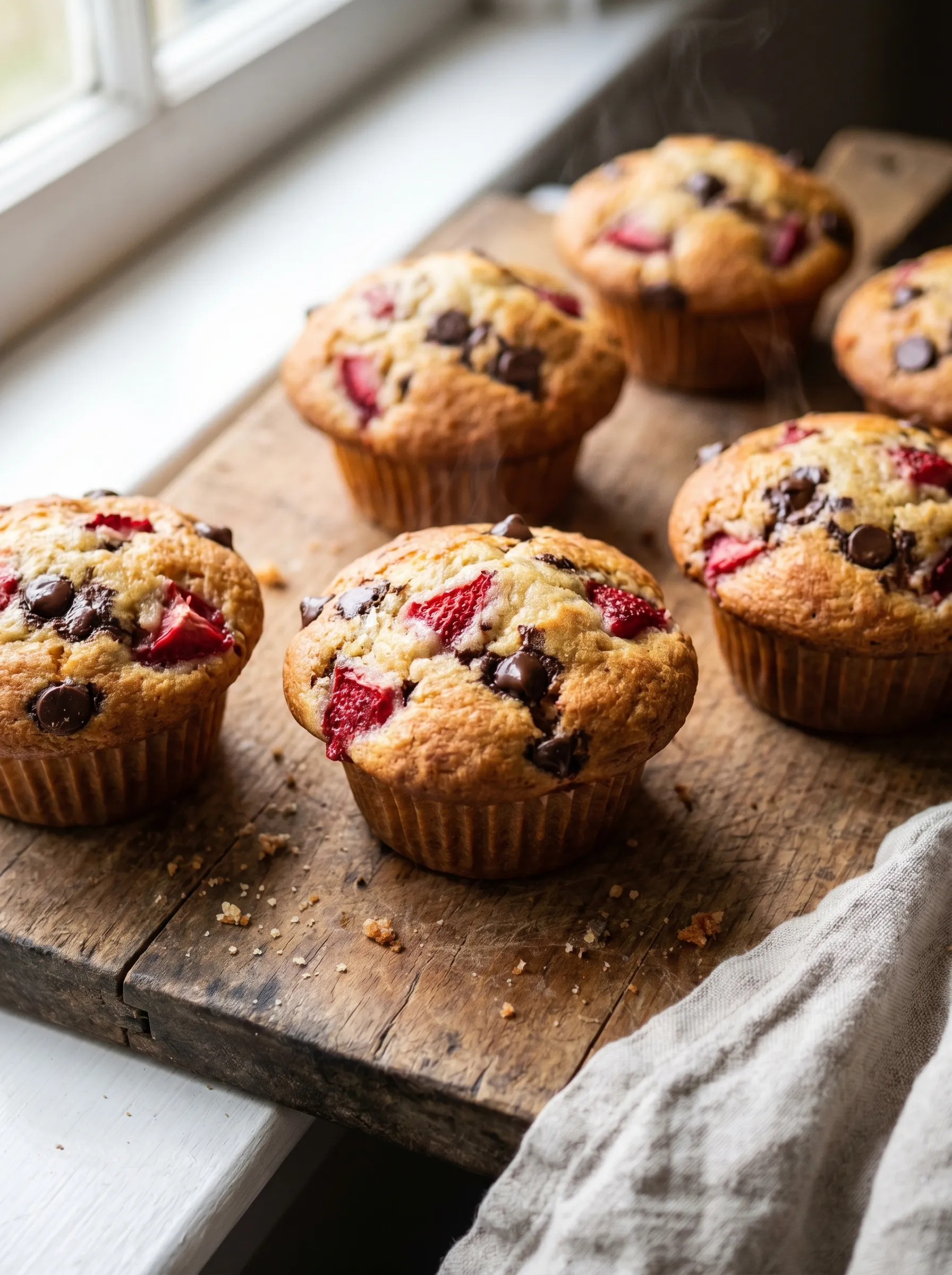
There's something almost magical about pulling a tray of muffins out of the oven that golden dome, the smell of warm berries, the little pockets of melted chocolate peeking through. But if you've ever bitten into a homemade muffin and thought "why doesn't this taste like the ones from the bakery?".
I've made a embarrassing number of muffin batches over the years. Dense ones. Soggy-bottomed ones. Ones that looked beautiful and tasted like cardboard. And through all of that, I've learned that strawberry chocolate chip muffins aren't complicated but they do have a few secrets that make all the difference. Let's get into it.
Fresh or Frozen Strawberries: Which Should You Actually Use?
This is probably the question I get asked most. And honestly? Both work but they behave very differently in the batter.
- Fresh strawberries hold their shape better, give you those beautiful jammy pockets, and add a bright, clean flavour. They're ideal when strawberries are in season and you want a lighter, less soggy crumb.
- Frozen strawberries release more moisture as they bake, which can make your muffins denser and sometimes soggy at the bottom if you're not careful. If you're using frozen, don't thaw them first — add them straight from the freezer to reduce moisture bleed into the batter.
My honest recommendation: use fresh when you can. But don't let frozen stop you from baking just adjust slightly (more on that below).
The One Thing You Should Never Do to Muffin Batter
Overmix it. Full stop.
I know it's tempting to keep stirring until everything looks perfectly smooth and combined. Resist that urge with everything you have. When you overmix muffin batter, you develop the gluten in the flour, and that turns your muffins from tender and fluffy into tough, rubbery, and dense. Overmixed muffins also tend to have peaked, uneven tops rather than that beautiful rounded dome.
The golden rule: stir until the dry ingredients are just incorporated. A few streaks of flour are totally fine. Lumps are your friends. Stop mixing the moment you don't see any dry pockets of flour and not a stir more.
The Secret to a Genuinely Moist Muffin
Moisture in muffins comes from a combination of factors and understanding them changes everything:
- Fat is your friend. Whether that's butter, oil, or sour cream, fat keeps the crumb tender and moist. Many bakeries use a combination of butter (for flavour) and oil (for moisture retention).
- Don't overbake. This is where most home bakers lose the plot. Pull your muffins out when a toothpick comes out with a few moist crumbs not bone dry. Carryover heat will finish the job.
- The right flour matters. All-purpose flour is your standard go-to. Cake flour will give you a more delicate, tender crumb. Avoid bread flour too much protein, too much chew.
- Temperature matters more than you think. Most muffins do well at around 190–200°C (375–400°F). A higher heat gives you that dramatic rise and domed top; too low and they spread flat and dry out.
What Is the 1-2-3-4 Rule in Baking?
You might have seen this mentioned and wondered what it actually means. The 1-2-3-4 rule is a classic ratio for baking that keeps proportions balanced: 1 part fat, 2 parts sugar, 3 parts flour, 4 parts eggs (by weight). It's more of a cake guideline than a strict muffin rule, but understanding it helps you see why recipes work the way they do and how to troubleshoot when things go wrong.
For muffins specifically, the ratio is a bit looser, but the principle holds: keep your wet-to-dry balance in check and you'll get consistent results every time.
Why Is the Bottom of My Muffin Soggy?
Ah, the soggy bottom the bane of every muffin baker's existence. A few culprits to check:
- Too much fruit moisture. Strawberries (especially frozen ones) release a lot of liquid. Toss your fruit lightly in a tablespoon of flour before folding it into the batter it absorbs some of that excess juice.
- Underbaking. The centre needs time to fully set. If you're pulling them too early, the bottom stays wet.
- Overcrowded tin. Use a proper muffin tin and fill each cup about ¾ full. Overcrowding traps steam.
- Greased paper vs. spray. If you're using paper liners, make sure they're snug. Loose liners trap moisture underneath.
Why Bakery Muffins Taste So Much Better (And How to Close the Gap)
Commercial bakeries have a few tricks up their sleeve that home bakers don't always know about. The biggest one? They let the batter rest. Allowing muffin batter to sit in the fridge for 30 minutes to overnight gives the flour time to fully hydrate, and the result is a noticeably more flavourful, tender muffin with a better rise.
They also tend to use more fat, more sugar, and better-quality vanilla than most home recipes call for. And they fill those cups generously a heaped, almost overflowing cup gives you that iconic domed top.
Try resting your batter overnight at least once. I promise you'll never skip that step again.
Is a Muffin Healthy? (Let's Be Honest)
A standard bakery-style muffin typically sits somewhere around 400–500 calories, depending on size and ingredients. So no it's not a health food. But it's also not the enemy. It's a treat, and it should taste like one.
If you're looking to lighten things up, swapping some of the fat for Greek yogurt, reducing the sugar slightly, or using wholemeal flour for part of the flour works reasonably well without destroying the texture. Just don't go too far nobody wants a virtuous muffin that tastes like regret.
Key Takeaways
- Don't overmix ever. Lumpy batter is perfect batter.
- Toss your strawberries in flour before folding them in to prevent sogginess.
- Use frozen strawberries straight from frozen, never thawed.
- Rest your batter in the fridge for at least 30 minutes (overnight is even better).
- Pull muffins from the oven when a toothpick shows moist crumbs, not a clean pull.
- Fill your muffin cups generously for that bakery-style dome.
Ready to Bake?
Now you've got the knowledge the full picture of what separates a good muffin from a great one. Whether you're baking these for a lazy Sunday morning, a school lunchbox, or just because you deserve something delicious today, these strawberry chocolate chip muffins are going to deliver.
Try the recipe below, and when you do come back and leave a comment. Tell me whether you went fresh or frozen, whether you rested the batter, and what your family thought. That kind of real-world feedback is what makes a recipe evolve, and I genuinely love hearing how these turn out in different kitchens.
Strawberry Chocolate Chip Muffins: The Ultimate Guide to Bakery-Style Results at Home
Learn the secrets to perfect strawberry chocolate chip muffins — from whether to use fresh or frozen strawberries, to why you should never overmix your batter. Bakery-style results at home.

Prep Time
15 min

Cook Time
20 min

Total Time
35 min

Servings
12
Ingredients
- 300 g plain (all-purpose) flour
- 150 g caster sugar
- 2 tsp baking powder
- 0.5 tsp bicarbonate of soda
- 0.5 tsp fine salt
- 2 large eggs
- 240 ml buttermilk (or whole milk with 1 tbsp lemon juice)
- 80 ml neutral oil (sunflower or vegetable)
- 60 g unsalted butter, melted and cooled
- 1.5 tsp vanilla extract
- 200 g fresh strawberries, hulled and chopped into small pieces
- 150 g chocolate chips (milk or dark, your preference)
- 1 tbsp plain flour (for tossing the fruit)
Instructions
- Preheat your oven to 200°C (180°C fan / 400°F). Line a 12-hole muffin tin with paper cases or grease well.
- In a large bowl, whisk together the flour, sugar, baking powder, bicarbonate of soda, and salt. Set aside.
- In a separate jug or bowl, whisk the eggs, buttermilk, oil, melted butter, and vanilla extract until well combined.
- Toss the chopped strawberries and chocolate chips with the 1 tablespoon of flour until lightly coated. This prevents them sinking and reduces sogginess.
- Pour the wet ingredients into the dry ingredients and fold gently with a spatula until JUST combined. Do not overmix — a few lumps are completely fine and actually desirable.
- Fold in the floured strawberries and chocolate chips with just 2–3 folds.
- Optional but recommended: cover the bowl and refrigerate the batter for 30 minutes to overnight for a better rise and deeper flavour.
- Divide the batter evenly between the 12 muffin cases, filling each generously — almost to the top — for a domed bakery-style top.
- Bake for 20–23 minutes until the tops are golden and a toothpick inserted into the centre comes out with a few moist crumbs (not wet batter, not bone dry).
- Leave to cool in the tin for 5 minutes, then transfer to a wire rack. They're best eaten warm but keep well for 2 days at room temperature in an airtight container.
Notes
- Frozen strawberries: use straight from frozen — never thawed — to reduce moisture bleed. Add 1–2 extra minutes to bake time.
- Overnight batter rest: if you have the time, resting the batter in the fridge overnight is the single biggest upgrade you can make. The tops rise higher and the flavour is noticeably better.
- Chocolate: dark chocolate chips (70%) give a more sophisticated contrast to the sweet strawberries; milk chocolate is more crowd-pleasing for kids.
- Soggy bottom fix: make sure you toss the fruit in flour, don't overfill with extra-juicy fruit, and ensure the muffins are fully baked before removing.
- Storage: muffins do not need refrigerating. Store at room temperature for up to 2 days, or freeze individually for up to 3 months.


Your email address will not be published. Required fields are marked