
Learn how to make rosemary sourdough bread with a crackly crust and fragrant crumb, plus expert tips on timing, rosemary amounts, and common mistakes to avoid.

Why Rosemary and Sourdough Belong Together
There's a reason rosemary sourdough shows up on nearly every artisan bakery shelf. The piney, slightly peppery oils in fresh rosemary cut through the tang of a naturally fermented dough, and the long fermentation time gives the herb hours to perfume every crumb instead of just sitting on top. If you've only ever baked plain sourdough, adding rosemary is one of the easiest ways to turn a good loaf into a memorable one, without changing your basic technique.
Key Takeaways
- Fresh rosemary gives a brighter, more fragrant result than dried, though dried works in a pinch at about a third of the volume.
- Rosemary is best folded in after autolyse and before bulk fermentation, not mixed in at the very start.
- Roughly chopping the rosemary releases more oil than leaving the sprigs whole, which spreads the flavor more evenly through the dough.
- Salt should always be added during mixing, not skipped or delayed, since it controls fermentation speed and structure.
- A hot, covered bake (around 450°F) for the first half of baking creates the steam that gives sourdough its signature crackly crust.
Is Rosemary Actually Good in Sourdough Bread?
Yes, and it's one of the more forgiving herbs to work with. Rosemary's oils are robust enough to survive a long, cool fermentation without turning bitter or musty, which is a real risk with more delicate herbs like basil or cilantro. Because sourdough already carries a mild acidity from the wild yeast and bacteria in the starter, rosemary's resinous, slightly bitter edge balances it rather than fighting it. Flavors that pair especially well alongside rosemary include roasted garlic, sea salt flakes, cracked black pepper, sharp cheeses like parmesan or asiago, and even a light drizzle of good olive oil worked into the dough itself.
If you're wondering about health angles, sourdough fermentation is generally associated with easier digestion and a lower impact on blood sugar than bread made with commercial yeast, since the fermentation process partially breaks down starches and gluten structures before baking. That said, sourdough is still bread, and a couple of slices a day fits comfortably into most balanced diets, though anyone managing blood sugar closely should treat it the same as they would any other bread and pay attention to portion size.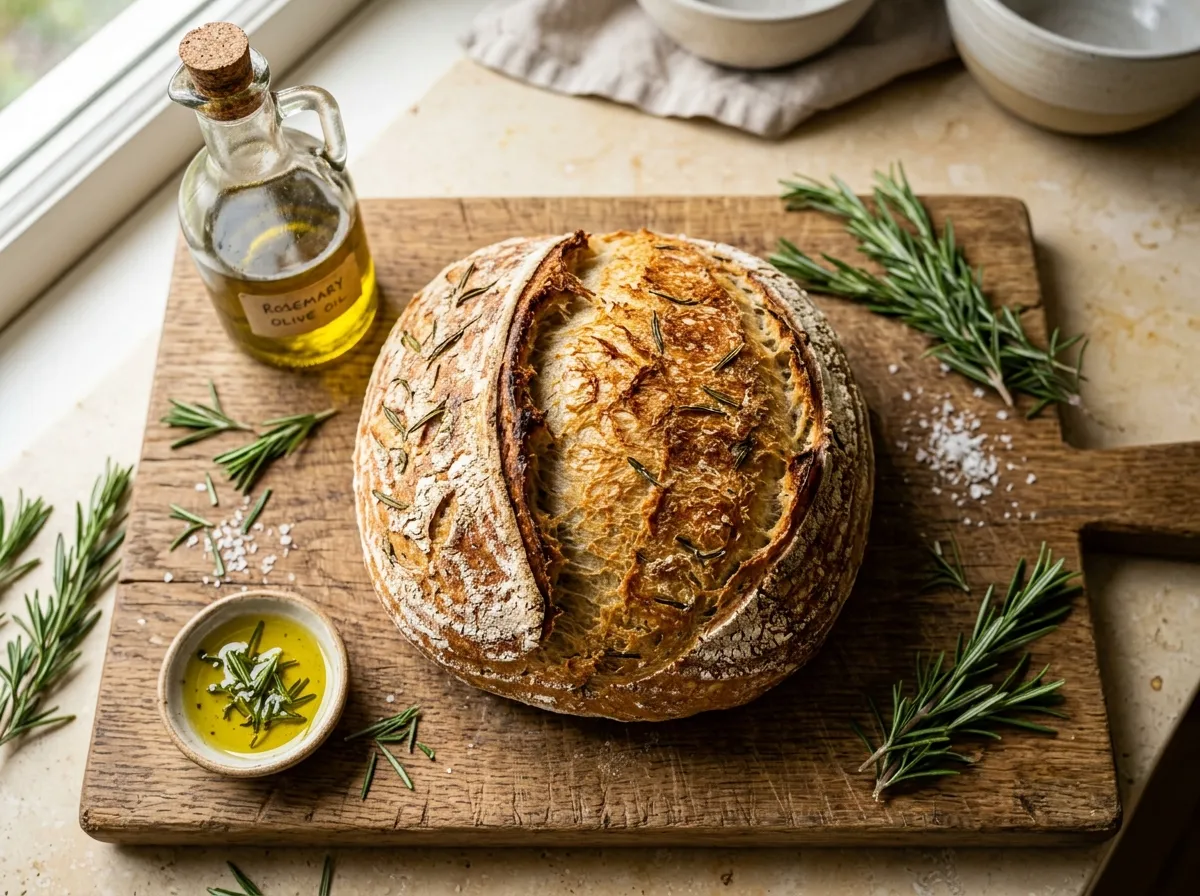
How Much Rosemary Should You Add?
For a standard loaf using about 4 cups of flour, 2 to 3 tablespoons of finely chopped fresh rosemary is the sweet spot. That's enough to taste in every bite without turning the crumb bitter. If you only have dried rosemary on hand, cut the amount to about 1 tablespoon, since drying concentrates the oils significantly. Whether you should chop it is not really optional: whole sprigs or large pieces bake into hard, woody bits that are unpleasant to bite into, while a fine chop releases the aromatic oils directly into the dough and disappears into the crumb.
One of the most common sourdough mistakes, rosemary or not, is being inconsistent with your starter's feeding schedule or using a starter that isn't active enough to leaven the dough. A sluggish starter will still produce bread, but it will be dense and sour rather than light and complex. If you ever forget to add salt to your dough, it isn't ruined, but the fermentation will move much faster and the structure will be noticeably weaker, so it's worth incorporating a small amount even if you catch the mistake partway through mixing.
When to Add Herbs When Making Sourdough
Timing matters more than most bakers expect. Add rosemary too early, during the initial flour and water mix, and the salt and prolonged hydration can dull its flavor and turn the herb slightly slimy. The better approach is to let the dough autolyse first, rest the flour and water together for 30 to 60 minutes, then fold in the salt and rosemary together at the start of bulk fermentation. This way the herb gets folded evenly throughout the dough during your stretch and folds, rather than clumping in one spot.
The same logic applies to other inclusions like garlic, sun-dried tomatoes, or cheese: fold them in early enough that they distribute evenly, but not so early that they interfere with gluten development during the initial mix.
What Goes Well With Rosemary in Sourdough
Rosemary plays nicely with a short list of proven companions. Roasted garlic is the classic pairing, adding sweetness that balances rosemary's bitterness. Flaky sea salt on top of the crust before baking adds crunch and a savory finish. Grated parmesan or asiago folded into the dough brings umami depth, and a few grinds of black pepper add warmth without overpowering the herb. If you want to experiment further, thinly sliced sun-dried tomatoes or a handful of chopped kalamata olives both complement rosemary without clashing.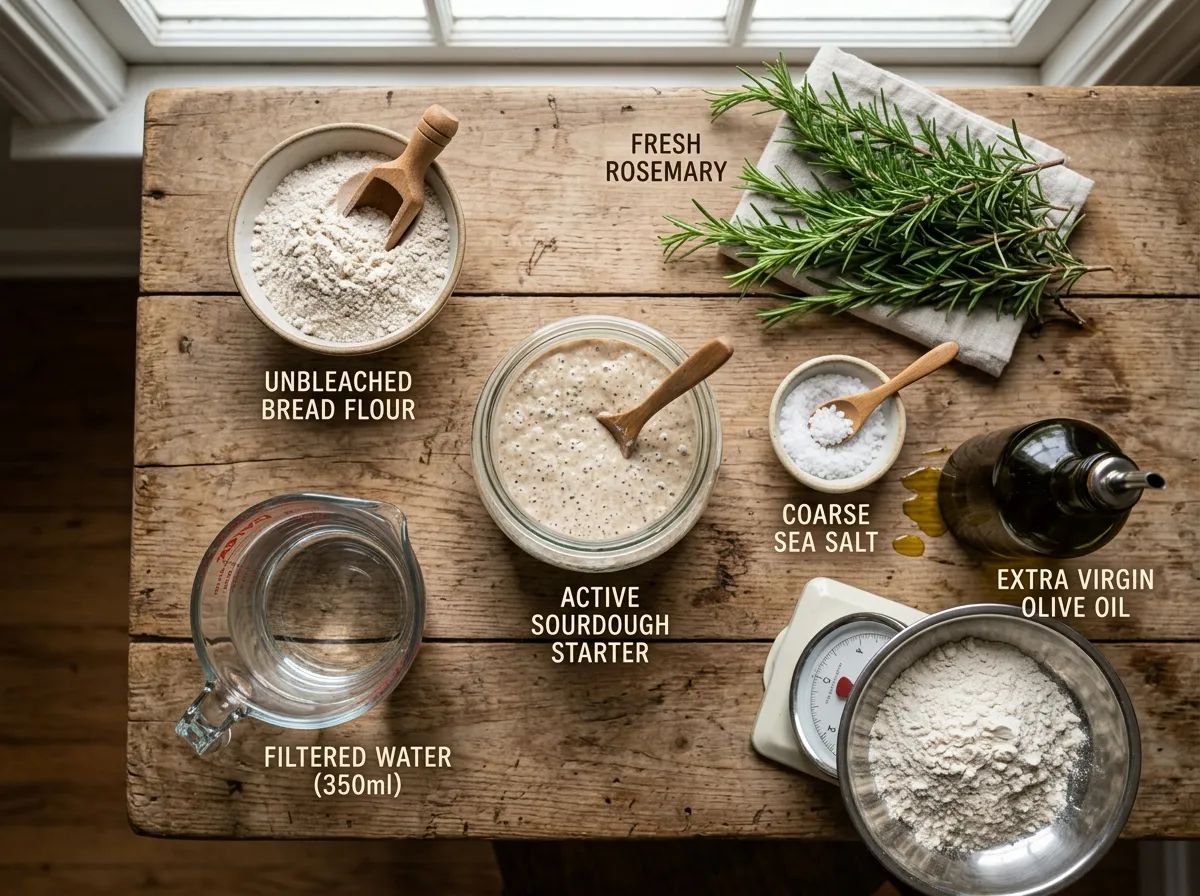
Rosemary Sourdough Bread Recipe
Step-by-Step Instructions
- Combine the active sourdough starter with water in a large bowl, then mix in the bread flour until no dry patches remain. Cover and let rest for 45 minutes.

- Sprinkle the salt and chopped rosemary over the dough and fold them in thoroughly by hand until fully incorporated.
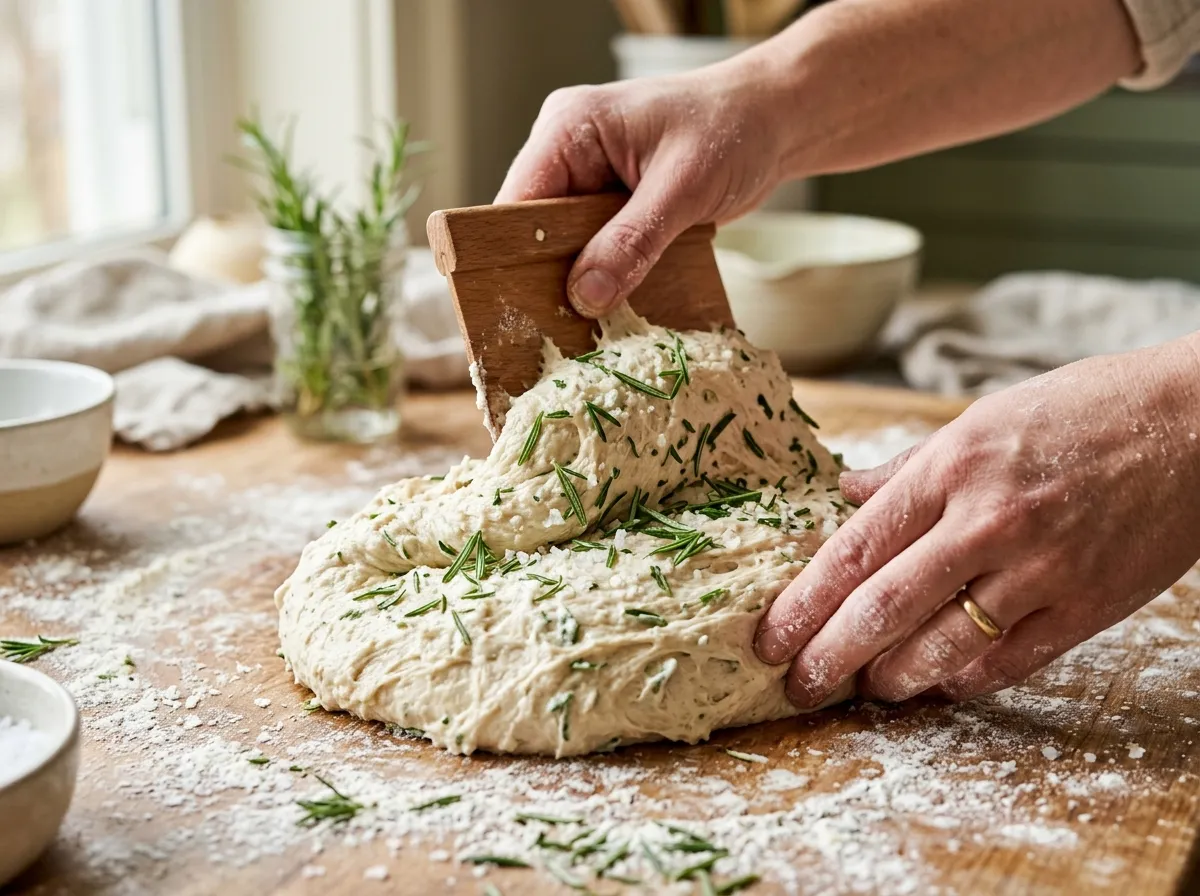
- Perform four sets of stretch and folds, spaced 30 minutes apart, to build dough strength.

- Cover the bowl and let the dough bulk ferment at room temperature for 4 to 6 hours, until visibly puffy and increased by about 50 percent
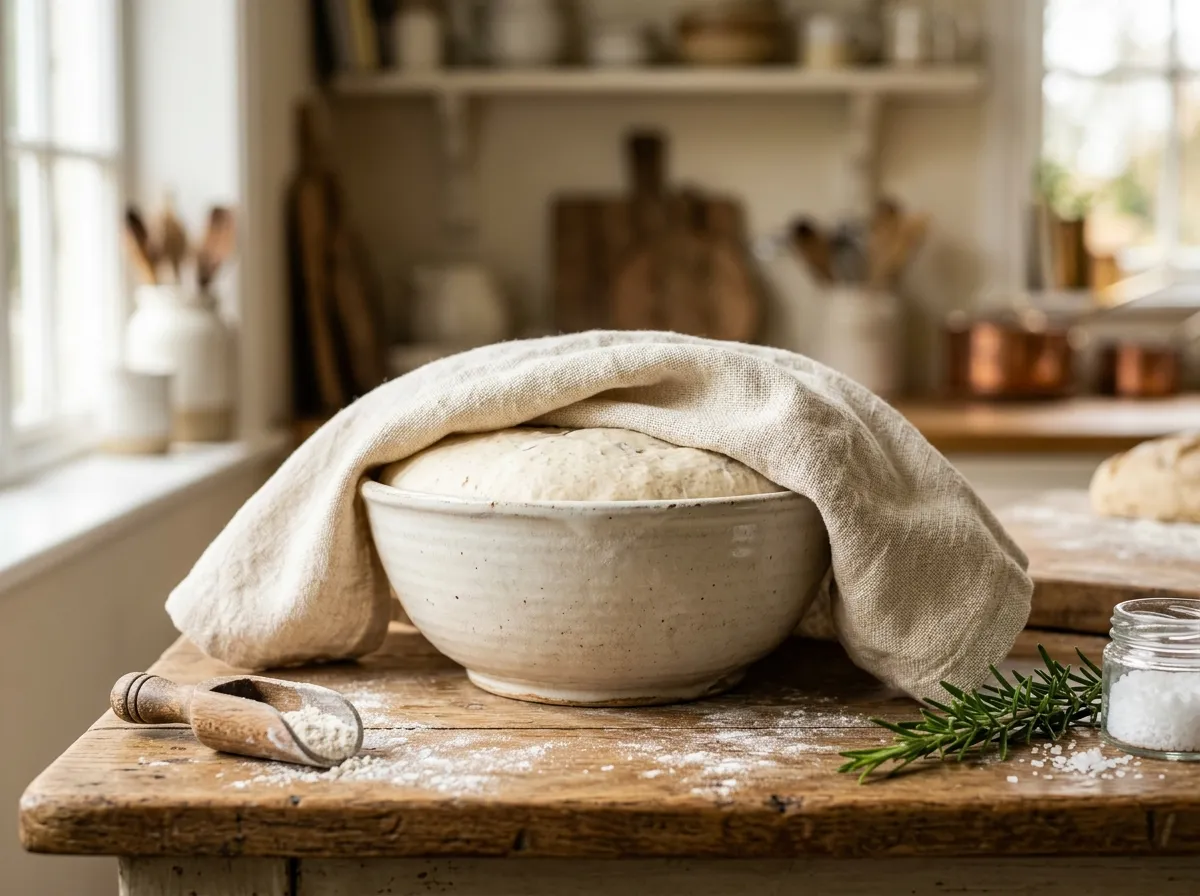
- Turn the dough onto a floured surface, shape it into a tight round boule, and place it seam-side up in a floured proofing basket.
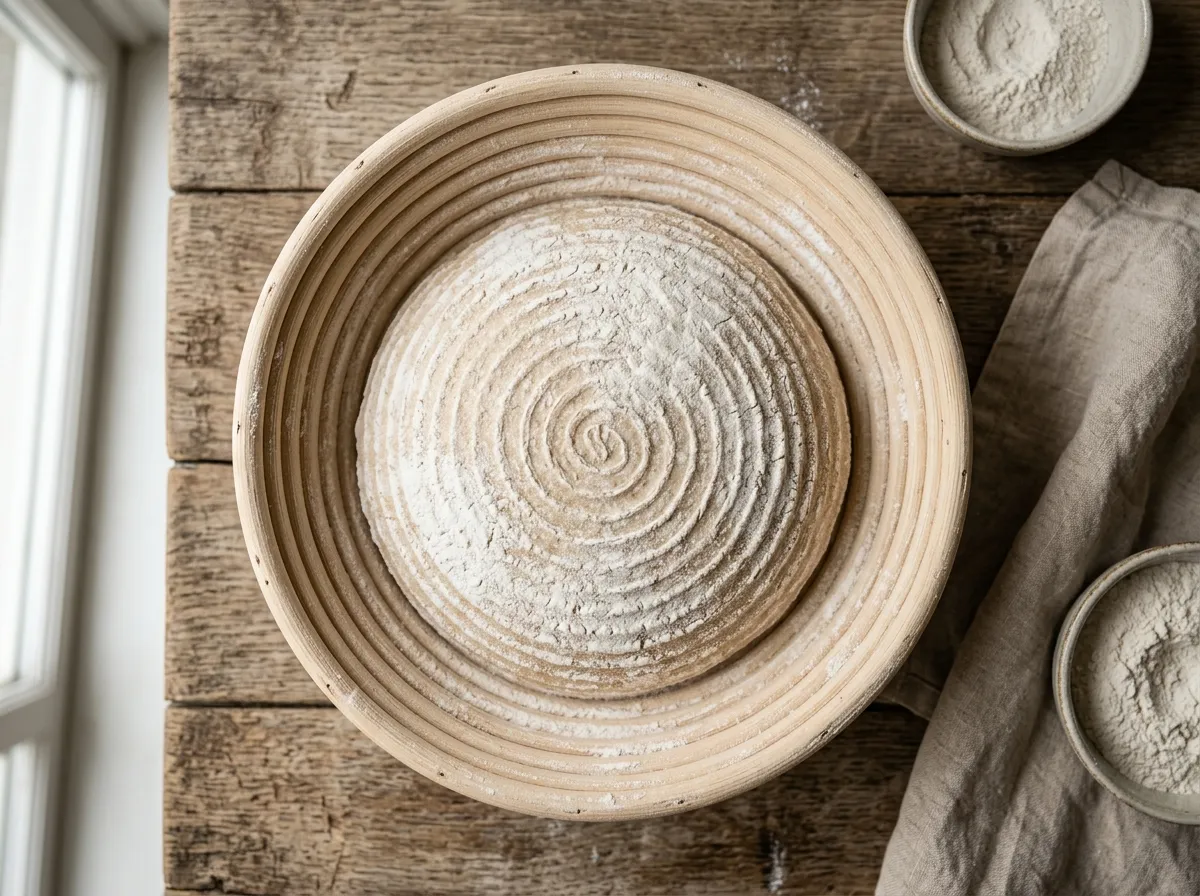
- Refrigerate the shaped dough overnight, 8 to 12 hours, for a cold, slow final proof that deepens flavor

- Preheat a Dutch oven at 450°F for 30 minutes, then score the cold dough with a sharp blade and transfer it into the pot

- Bake covered for 20 minutes, then remove the lid and bake uncovered for another 20 to 25 minutes until the crust is deep golden brown
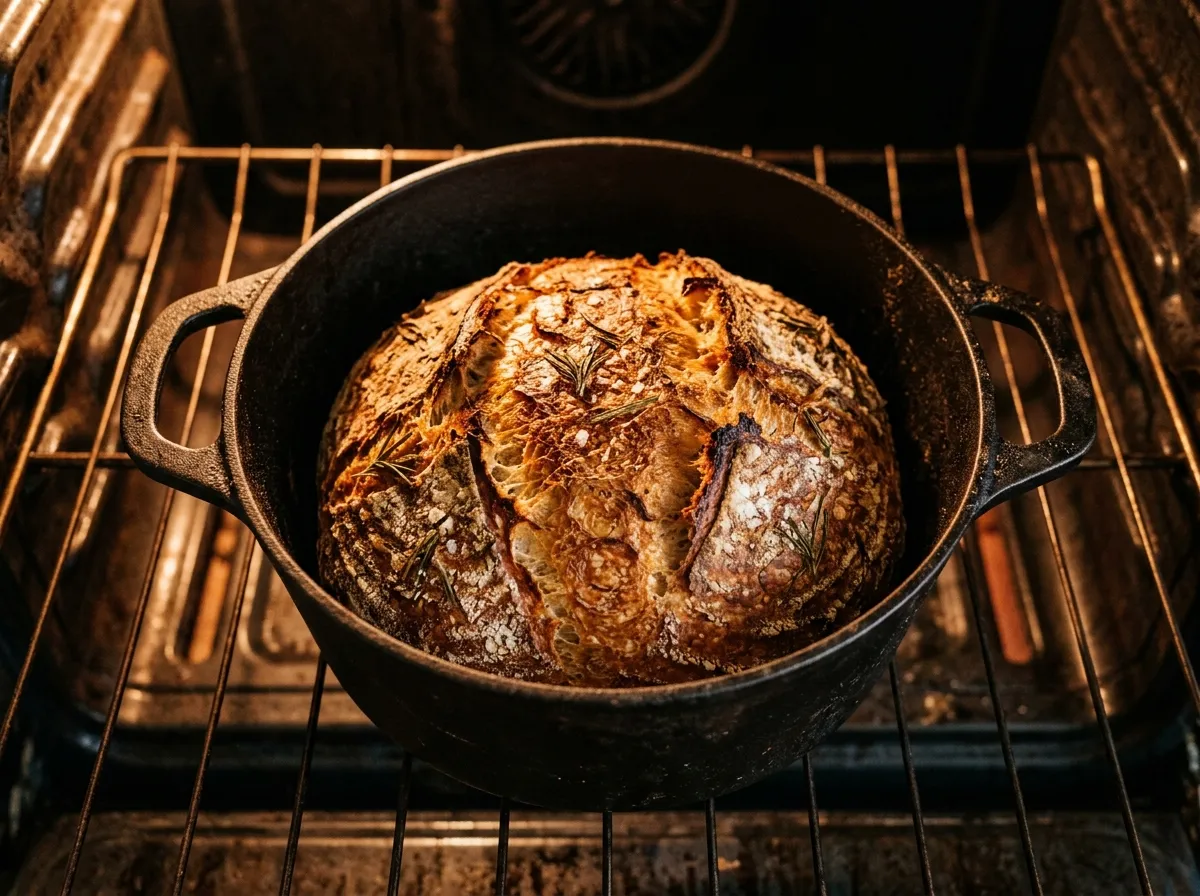
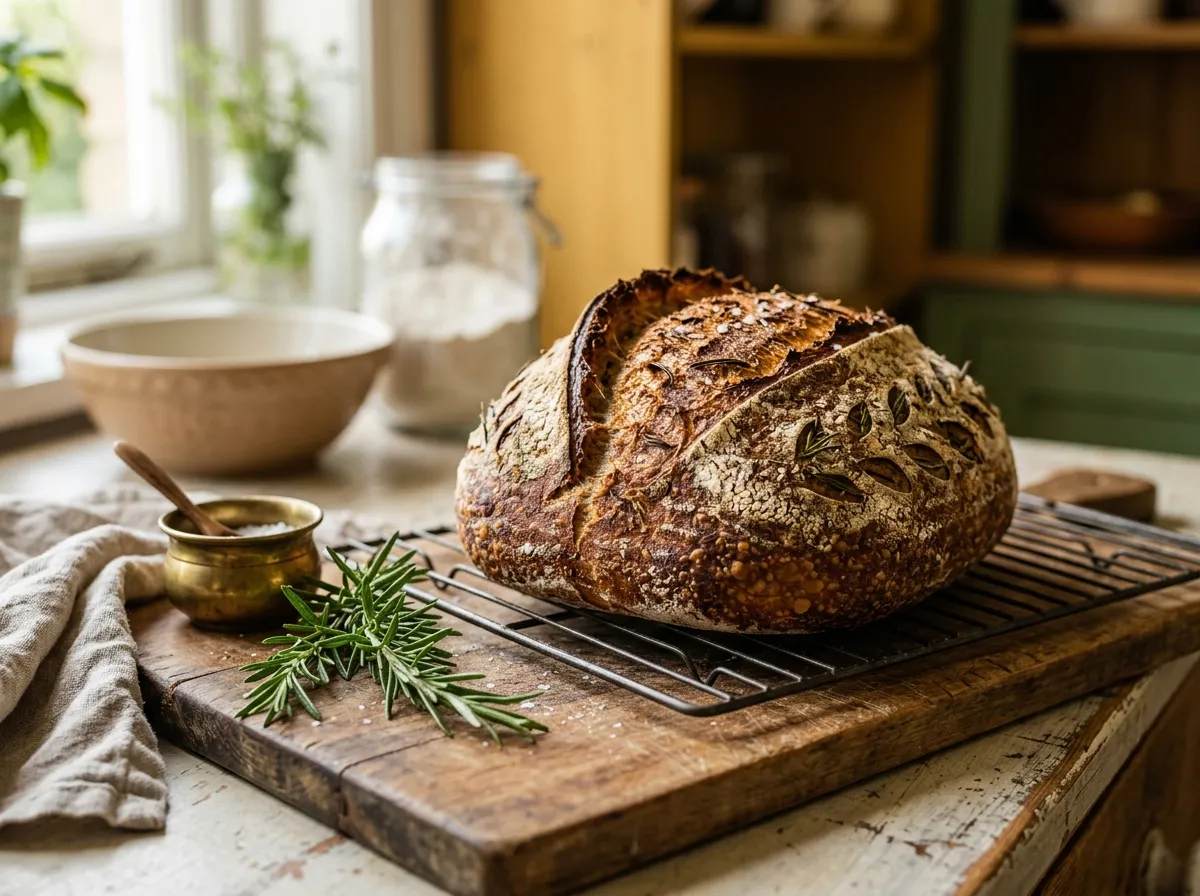
- Cool the loaf completely on a wire rack for at least one hour before slicing.
Helpful Tips
- Let the loaf cool fully before cutting. Slicing too early lets steam escape and leaves the crumb gummy.
- Use a kitchen scale rather than cups for the flour and water. Sourdough hydration is unforgiving of imprecise measuring.
- If your kitchen runs cold, extend bulk fermentation rather than rushing it. A slow rise builds better flavor than a fast one.
- Brushing the crust with olive oil right after baking gives it a slight sheen and softens the rosemary aroma on top.
Frequently Asked Questions
Should I chop rosemary for sourdough bread?
Yes. Chopping releases the aromatic oils and prevents woody, hard-to-chew pieces in the finished crumb.
Is fresh rosemary stronger than dried?
Dried rosemary is more concentrated by volume, so you need less of it. Fresh rosemary has a brighter, greener flavor, while dried leans more resinous and intense.
Can you freeze rosemary sourdough?
Yes. Once fully cooled, wrap the loaf tightly in plastic and foil, or slice it first for easier portioning, and freeze for up to three months.
Should I bake sourdough covered or uncovered?
Start covered to trap steam for a good oven spring and a crisp crust, then finish uncovered so the crust can deepen in color.
What happens if you add salt too early to sourdough?
Adding salt directly with the flour and water can tighten the gluten too soon and slow the yeast activity slightly, which is why most bakers add it after a short autolyse rest instead.
Conclusion
Rosemary sourdough rewards patience more than skill. Once you understand when to fold in the herb, how much to use, and how to manage timing and temperature during the bake, you'll have a loaf that smells like a bakery and tastes even better. Give this version a try this week, and once you've got the rhythm down, it's easy to riff on with garlic, cheese, or olives for your own signature loaf.
Rosemary Sourdough Bread: The Complete Guide to Baking a Fragrant, Crackly-Crusted Loaf
Learn how to make rosemary sourdough bread with a crackly crust and fragrant crumb, plus expert tips on timing, rosemary amounts, and common mistakes to avoid.

Prep Time
30 min

Cook Time
45 min

Total Time
1h 15 min

Servings
12
Ingredients
- 1 cup active sourdough starter (240g)
- 1.5 cup water, room temperature (350g)
- 4 cup bread flour (500g), plus extra for dusting
- 2 tsp fine sea salt (10g)
- 3 tbsp fresh rosemary, finely chopped
- 1 tbsp olive oil, for brushing the crust
Instructions
- Combine the active sourdough starter with water in a large bowl, then mix in the bread flour until no dry patches remain. Cover and let rest for 45 minutes.
- Sprinkle the salt and chopped rosemary over the dough and fold them in thoroughly by hand until fully incorporated.
- Perform four sets of stretch and folds, spaced 30 minutes apart, to build dough strength.
- Cover the bowl and let the dough bulk ferment at room temperature for 4 to 6 hours, until visibly puffy and increased by about 50 percent.
- Turn the dough onto a floured surface, shape it into a tight round boule, and place it seam-side up in a floured proofing basket.
- Refrigerate the shaped dough overnight, 8 to 12 hours, for a cold, slow final proof that deepens flavor.
- Preheat a Dutch oven at 450°F for 30 minutes, then score the cold dough with a sharp blade and transfer it into the pot.
- Bake covered for 20 minutes, then remove the lid and bake uncovered for another 20 to 25 minutes until the crust is deep golden brown.
- Cool the loaf completely on a wire rack for at least one hour before slicing.
Notes
- Substitute 1 tablespoon of dried rosemary if fresh isn't available, since drying concentrates the flavor significantly.
- For an extra savory version, fold in a half cup of grated parmesan along with the rosemary.
- The overnight cold proof is optional but recommended for deeper flavor; a same-day version can proof at room temperature for 2 to 3 hours instead.
- Store the cooled loaf wrapped in a linen or paper bag at room temperature for up to 3 days, or freeze sliced portions for up to 3 months.

Your email address will not be published. Required fields are marked